TABLE OF CONTENTS
Introduction
When using an MDM, different use cases require different levels of access to the Google Play store. Some will allow open access to the Play store and others will restrict users to a pre-selected list of applications.
This guide will go in-depth regarding each way to set up the Google Play Store.
Managing Google Play Application Availability
To modify this setting, navigate to Project | Policies | Google Play Settings | Application Availability.
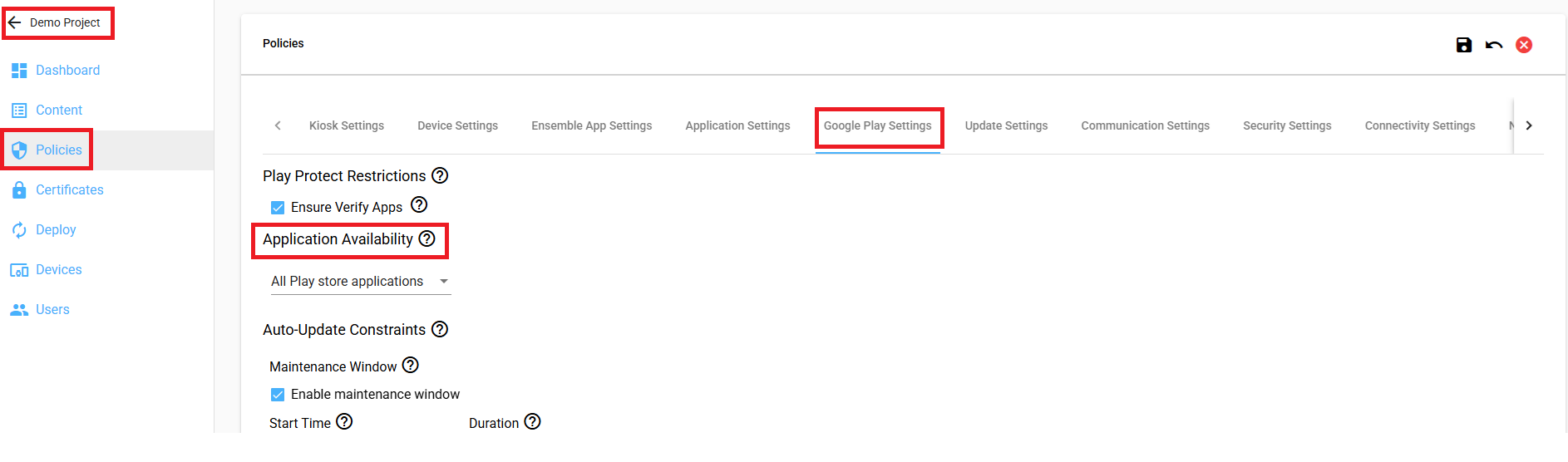
This policy can be set to "All Play Store Applications", or "Only Project Content".
All Play Store Applications
If you select "All Play Store Applications", the Play Store is completely open. Users can search for and download any application:

Expected behavior in different kiosk modes:
- None: the device is not kiosked and the Play store is open.
- Single: the device is kiosked to one app. The Play store is open, but access is hidden unless the kiosked app provides a way to access the Play Store application.
- Multi-app: the device is kiosked to Ensemble's launcher. The Play store is open, but access is restricted unless there is a shortcut added for the Play store or the app drawer was added to the favorites bar.
Only Project Content
If you select "Only Project Content", the Play Store is restricted to apps added to Project | Content. Users can only search for and download applications from that list:


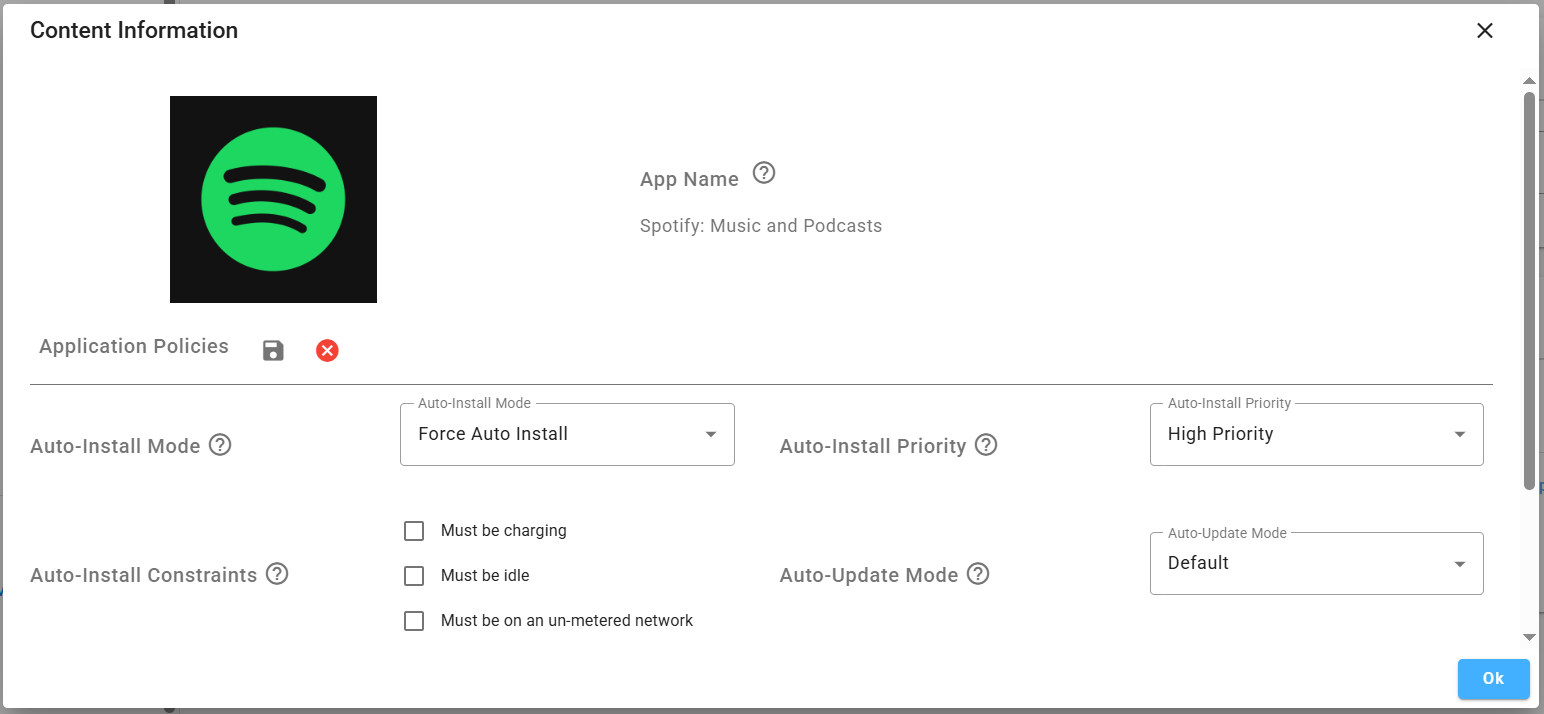
What if you want applications to appear in the restricted Play store, but don't want them installed automatically? Set Project | Content | Options | Auto-Install Mode to Do Not Auto Install. The application will appear in the restricted Play store, but will not install until the user chooses to install it. See the below picture for an example of this, with Spotify being set to Do Not Auto Install.
Expected behavior in different kiosk modes:
- None: the device is not kiosked and the Play store is restricted to the applications on the project.
- Single: the device is kiosked to one app. The Play store is restricted to the applications on the project, but access is hidden unless the kiosked app provides a way to access the Play Store application .
- Multi-app: the device is kiosked to Ensemble's launcher. The Play store is restricted to the applications on the project, but access is restricted unless there is a shortcut added for the Play store or the app drawer was added to the favorites bar.
Installation Types
When installing applications onto the device(s) on the project, there are three different ways to set that up: Force Auto Install, Auto Install Once, and Do Not Auto Install.
To access these options, navigate to the project, then the Content tab, and then click the Options button next to the application, and choose "Edit/View Information"
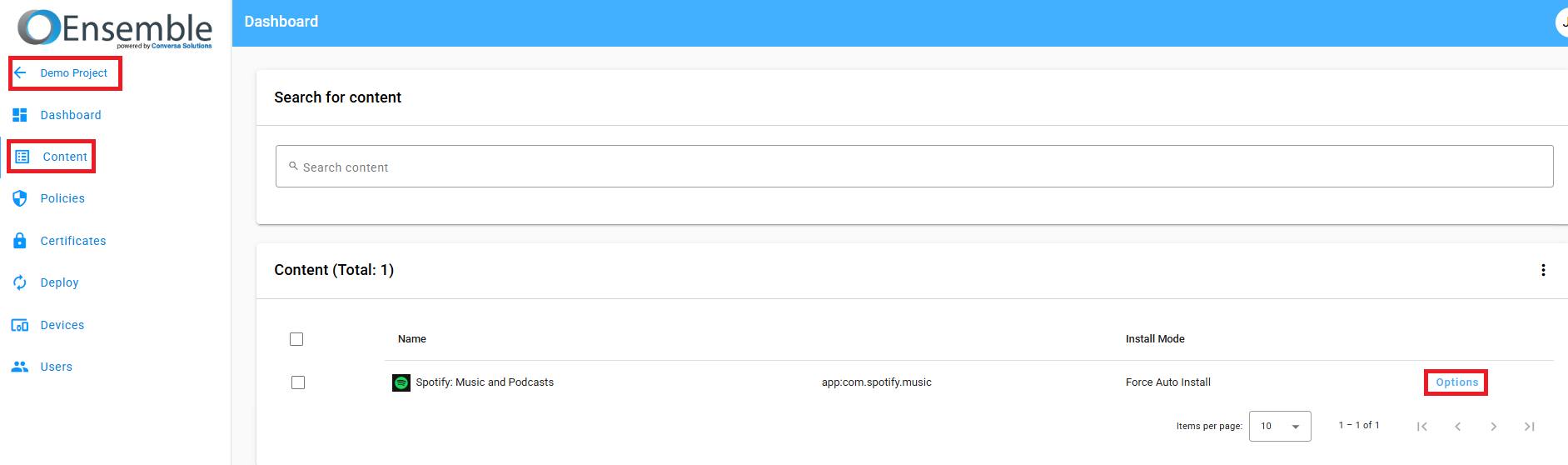
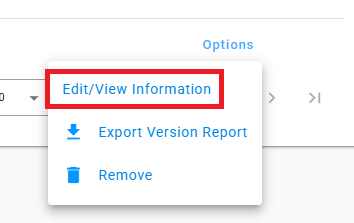
Once you are on that screen, you can choose the installation type after clicking the pencil icon to enable editing.
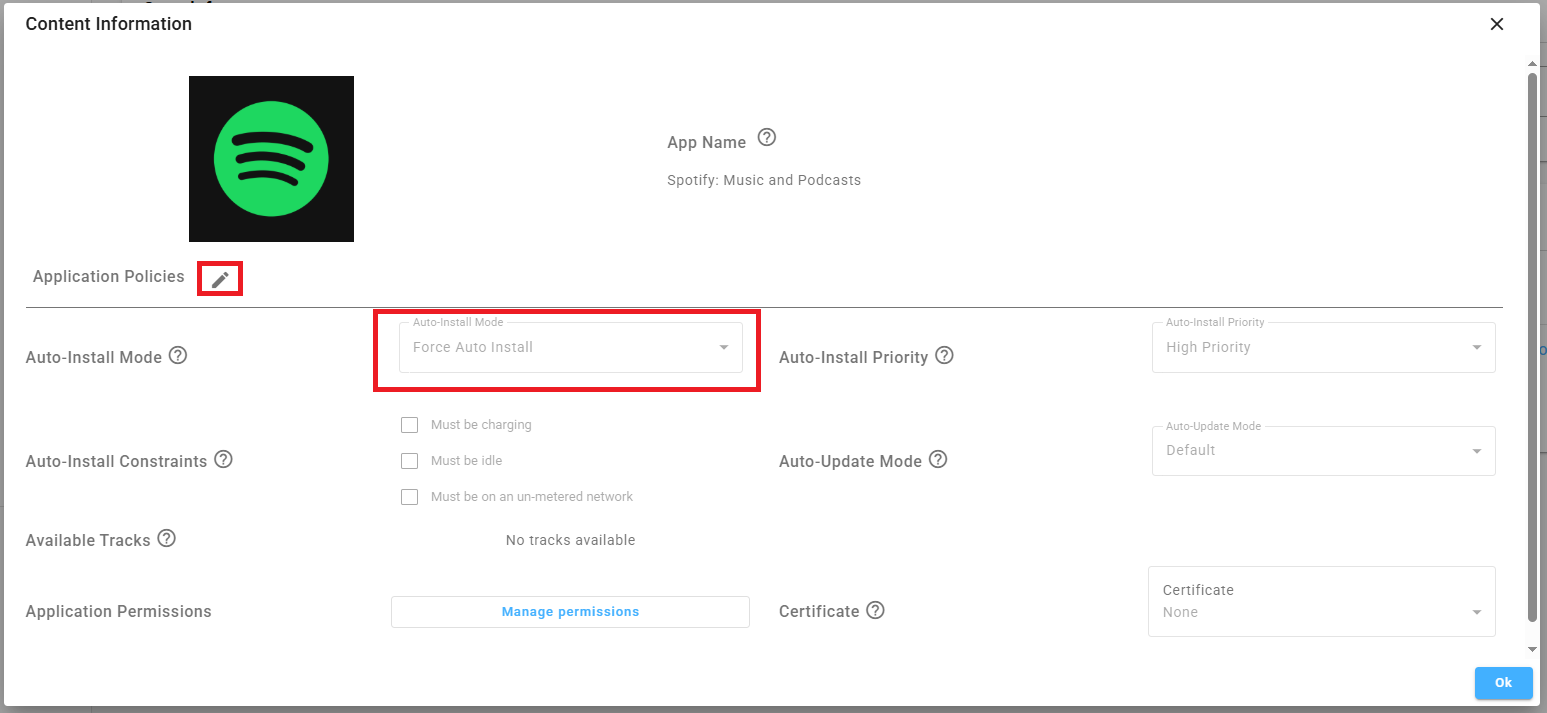
The types are as follows:
- Force Auto Install: This application will install as soon as possible.
- Auto Install Once: This application will be installed once. The app can be uninstalled and must be installed manually again if it is removed. Private apps can only be updated manually, or the APK itself must handle its own updates.
- Do Not Auto Install: This app will not automatically install. This allows the user to manually install the app but still use features like restrictions or permissions. The app can also be uninstalled.
Once you make any changes you need, be sure to click the save icon to save all changes, then deploy the project to push out those changes.